

Deep within your abdomen, working tirelessly 24/7, are two of your body’s most vital but often overlooked organs: your kidneys. We rarely give them a second thought, yet these amazing organs play a major role in keeping us clean and healthy, flushing out toxins and maintaining a delicate internal balance.
But these bean-shaped powerhouses hold some surprising secrets, and common misconceptions often surround their care. In an era marked by a dramatic and alarming increase in kidney disease, largely driven by rising rates of diabetes and hypertension, understanding these truths has never been more urgent. What if a serious kidney disease could have no symptoms at all?
This article will reveal five of the most impactful and counter-intuitive facts about your kidneys. Drawing from the comprehensive guide “Save Your Kidney,” we’ll uncover the truth behind their incredible power, their hidden vulnerabilities, and what you need to know to protect them.
1. Your kidneys filter a staggering amount of blood every single day.
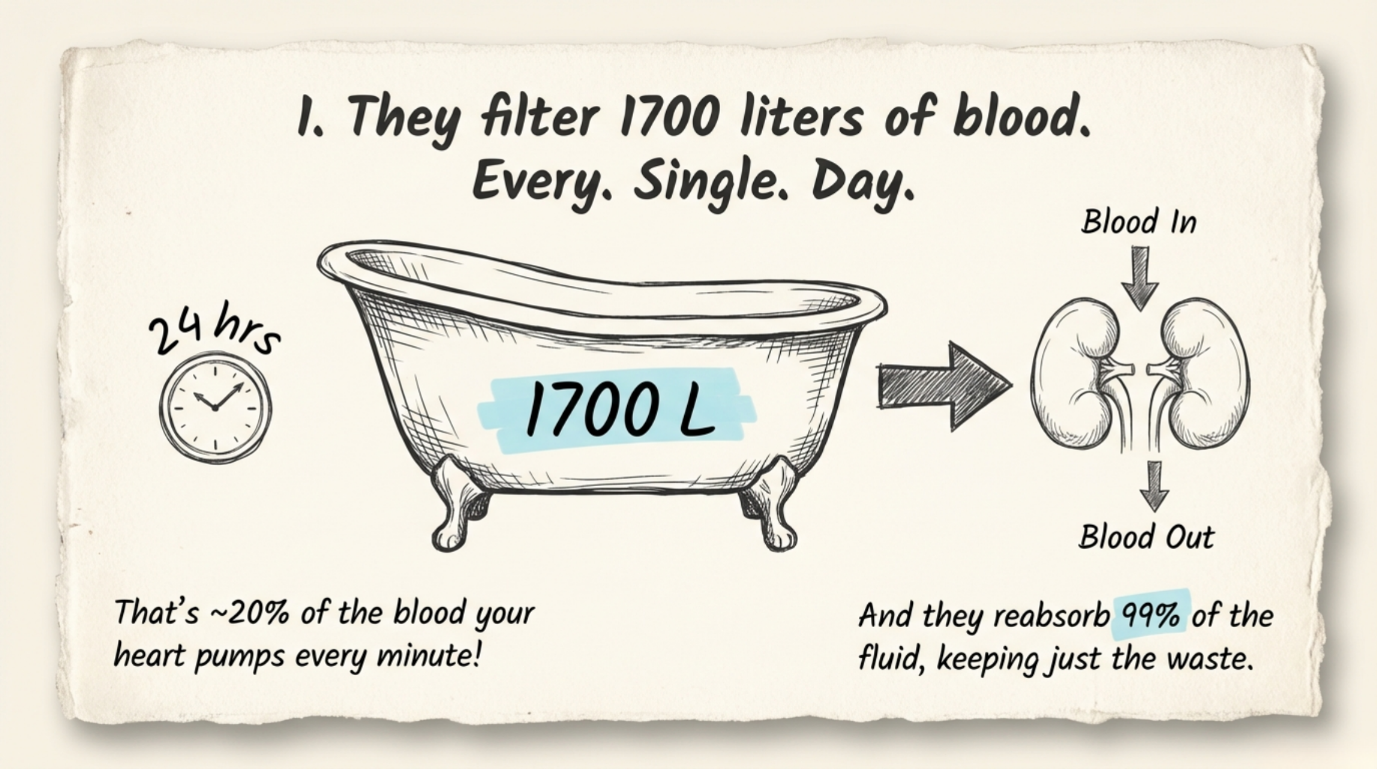
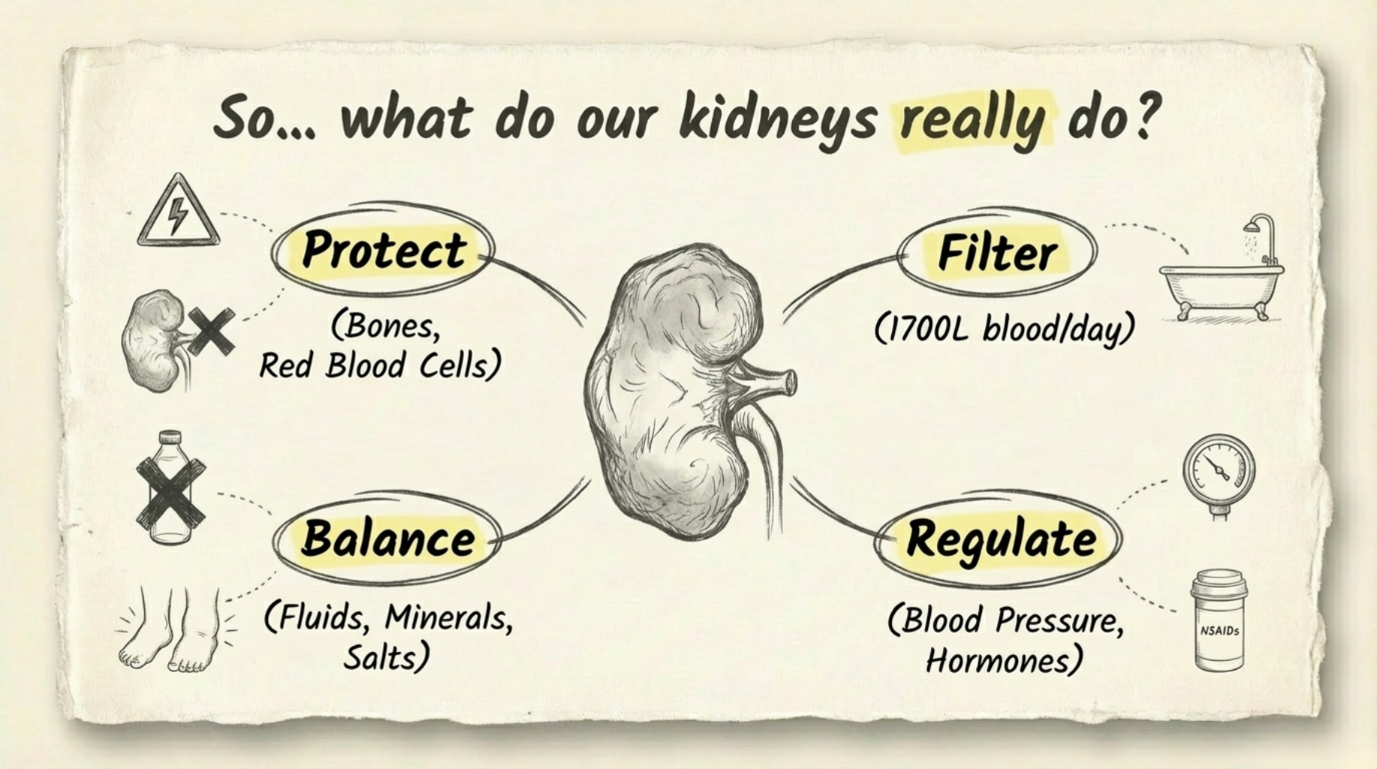
It’s difficult to overstate the sheer volume of work your kidneys perform. Every single day, they purify approximately 1700 liters of blood—enough to fill a dozen bathtubs. From this, they initially form about 180 liters of urine, but with incredible intelligence, they reabsorb over 99% of this fluid, retaining essential substances and excreting only the waste and excess water.
Did you know that every minute 1200 ml of blood enters in both kidneys for purification, which is 20% of the total blood pumped by the heart? So in one day 1700 liters of blood is purified!
This constant, high-volume process highlights the incredible efficiency of your body’s natural purification system, which works silently around the clock to keep your blood clean.
2. They’re multi-tasking managers, not just waste removers.
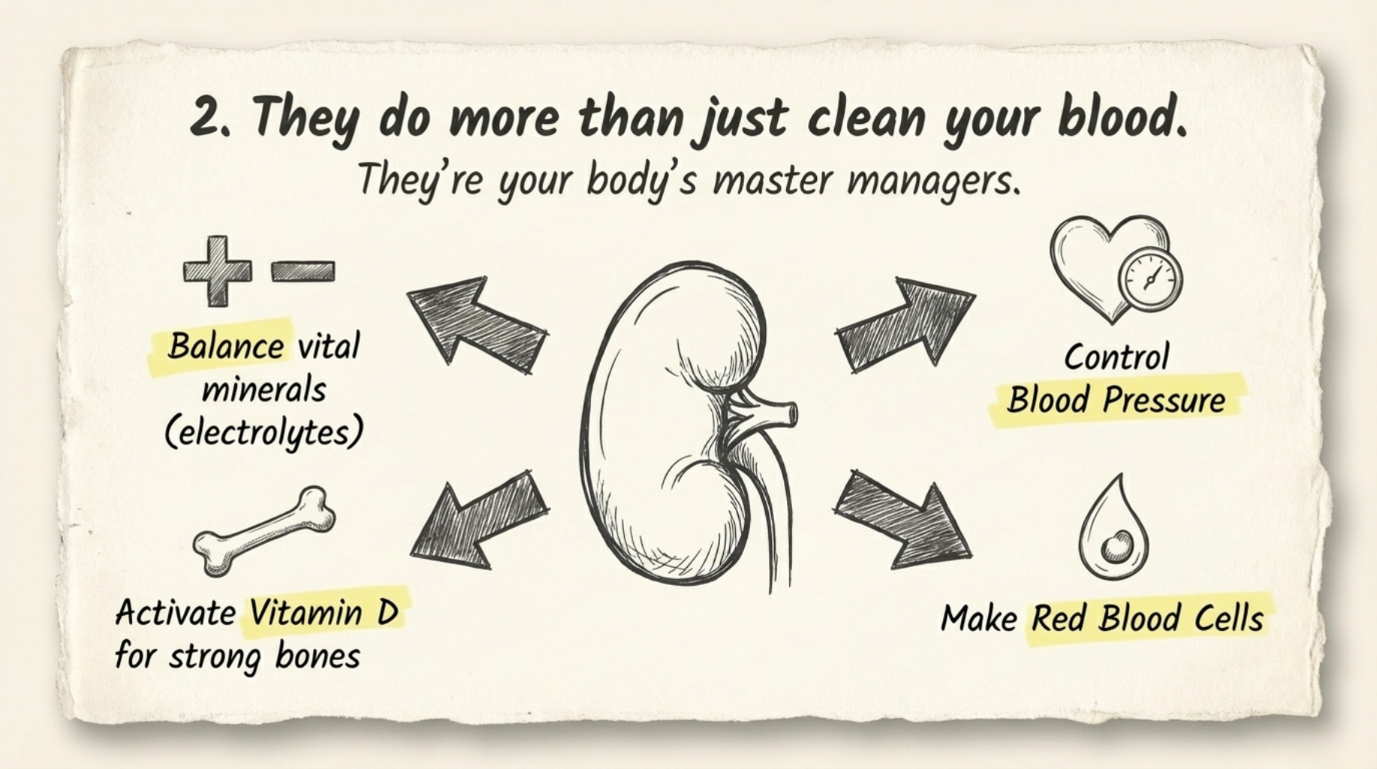
While filtering waste is their most famous job, it’s far from their only one. Your kidneys are masters of multitasking, performing several other functions that are absolutely critical for your overall health.
- Regulating blood pressure: They produce several hormones that play a vital role in controlling your blood pressure.
- Stimulating red blood cell production: They produce a hormone called erythropoietin, which is essential for creating red blood cells and preventing anemia.
- Activating vitamin D: Kidneys convert vitamin D into its active form, which is necessary for absorbing calcium and maintaining healthy bones and teeth.
- Balancing body chemistry: They meticulously regulate minerals like sodium and potassium, which are crucial for nerve function and can have serious effects on the rhythm of the heart.
Though its primary function is to remove toxins from the body, it is not the only function. The kidney also plays a crucial role in regulating blood pressure, volume of fluid and electrolytes in the body.
3. You can feel perfectly fine while having chronic kidney disease.
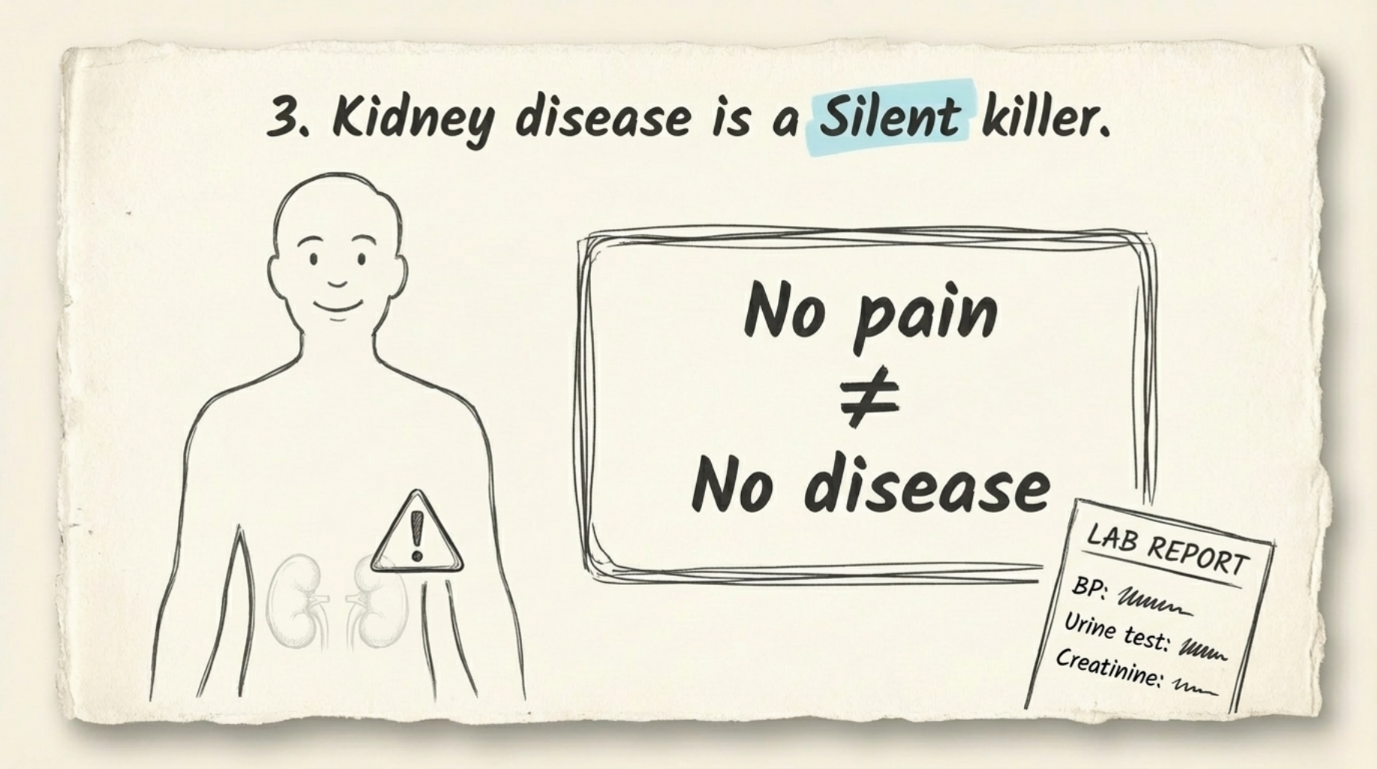
One of the most dangerous aspects of chronic kidney disease (CKD) is that it is often completely asymptomatic in its early stages. You can lose a significant amount of kidney function without experiencing a single symptom, feeling perfectly healthy as the damage progresses silently.
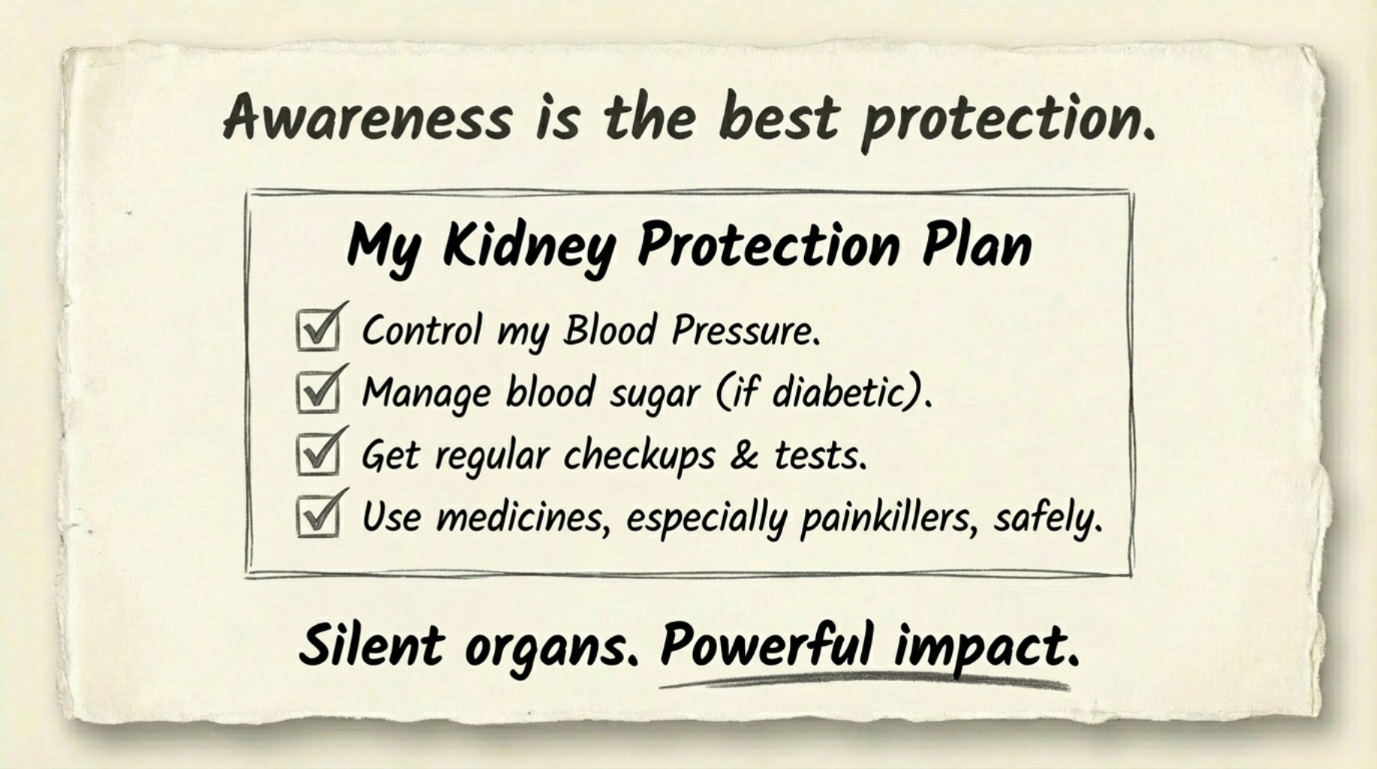
This “silent” nature is why awareness is so critical. Because you can’t rely on how you feel, simple screening tests—like a blood pressure check, a urine test for protein (albumin), and a blood test for creatinine—are the only way to detect the disease early enough to slow its progression.
Most of the patients are asymptomatic (showing no symptoms) in early stages of chronic kidney disease. Abnormal values in laboratory tests are the only clue of its presence at this stage.
This fact underscores the importance of regular check-ups, especially for individuals with major risk factors like diabetes and high blood pressure, which are the two leading causes of CKD.
4. Over-the-counter painkillers can be a hidden danger.
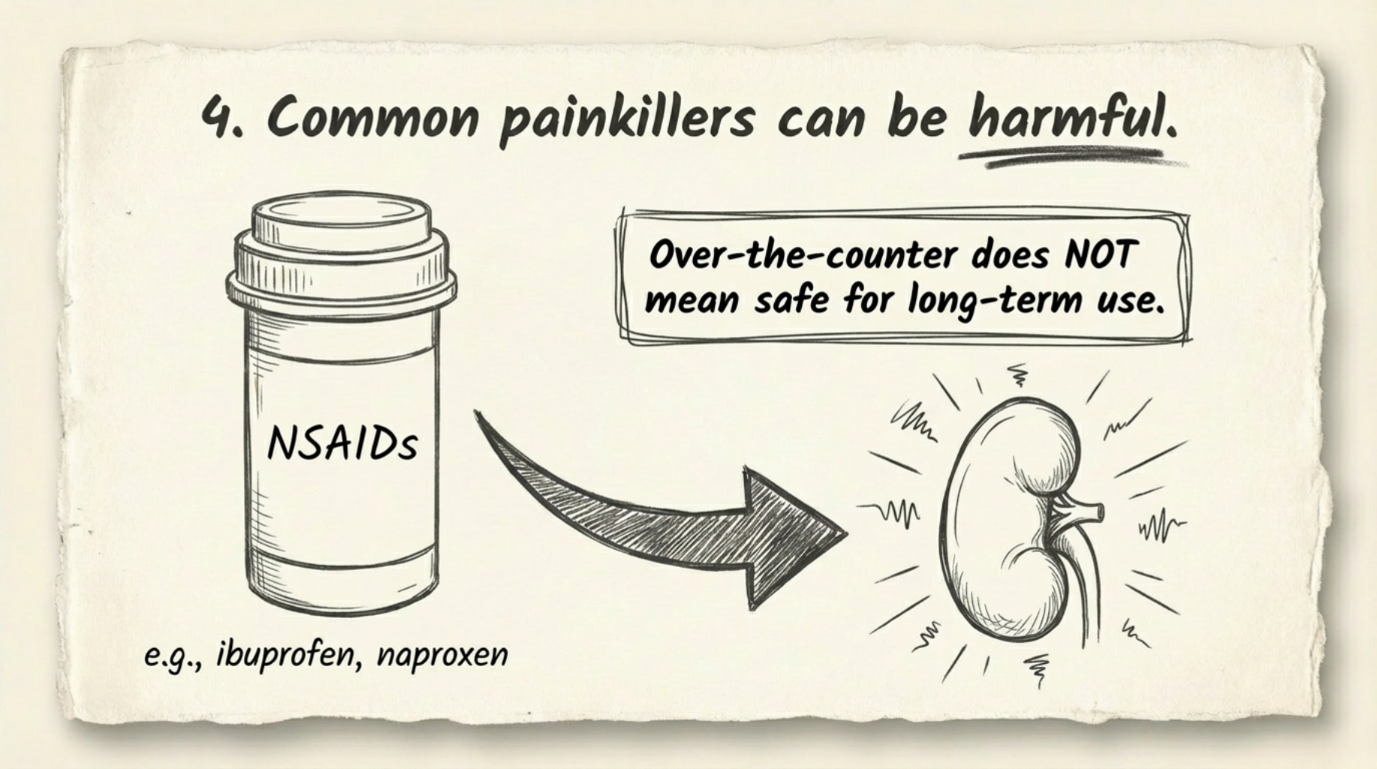
That bottle of painkillers in your medicine cabinet could pose a significant risk to your kidneys if not used carefully. Overusing common, over-the-counter drugs known as non-steroidal anti-inflammatory drugs (NSAIDs)—such as ibuprofen—can cause serious kidney damage. The key danger lies in the misconception that “over-the-counter” means “harmless,” leading to unsupervised, long-term use that can be devastating to kidney health.
In fact, these drugs are the second most common cause of drug-induced kidney damage. The risk is even higher for the elderly, individuals with pre-existing kidney problems, or anyone who takes them for long periods without a doctor’s supervision.
Don’t overuse over-the-counter painkillers on a regular basis. Common drugs such as NSAIDs like ibuprofen are known to cause kidney damage and kidney failure.
5. The advice to "drink lots of water" is not a universal rule for kidney patients.
We often hear that drinking plenty of water is one of the best things we can do for our kidneys. While this is true for preventing kidney stones or urinary tract infections in people with normal kidney function, it is a dangerous myth for many patients with established kidney disease.
For patients whose kidneys can no longer effectively remove excess fluid—a condition often marked by reduced urine output and swelling, known as edema—water restriction is necessary. In these cases, drinking too much water can lead to dangerous fluid overload, causing severe swelling and shortness of breath.
No. Reduced urine output leading to swelling is an important feature of many kidney diseases. So water restriction is necessary to maintain water balance in such patients with kidney disease.
Our kidneys are far more complex, powerful, and vulnerable than we often assume. They are not just simple filters but sophisticated managers of our body’s entire internal environment. Understanding these surprising truths—from their silent disease progression to the myths surrounding their care—is the first step toward protecting them.
Awareness is the best defense against a silent killer. Now that you know how much your kidneys do for you, what one small change can you make to help protect them for the future? In an era of rising diabetes and hypertension, that awareness is more critical than ever.
Author
Dr Deepak Agarwal