DCDC Kidney Care

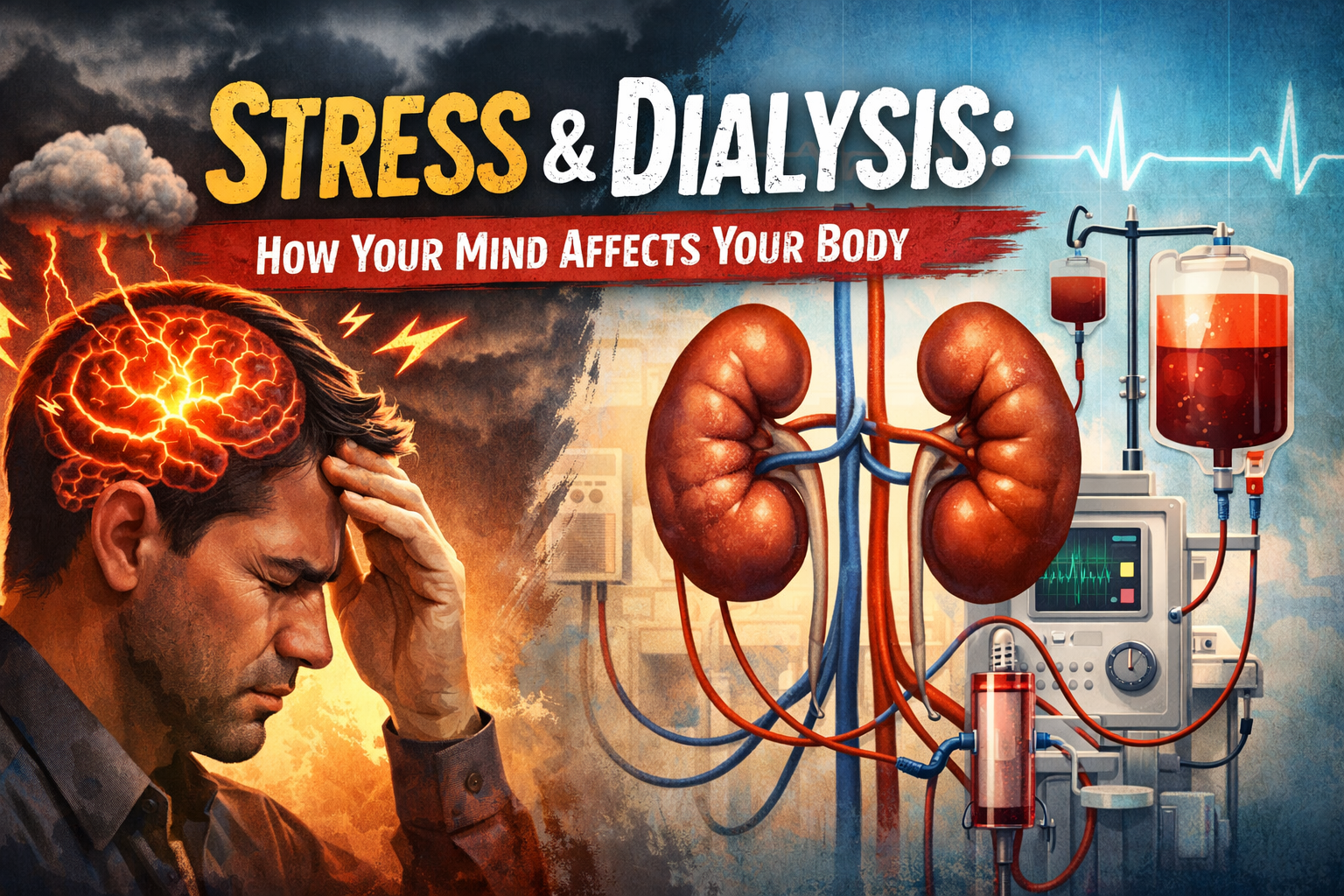
Stress and Dialysis: How Your Mind Affects Your Body

Living with dialysis is not just a physical journey — it’s an emotional one too. While most people focus on lab reports, creatinine levels, and treatment schedules, mental health often gets less attention. But the truth is simple: your mind and body are deeply connected. Stress can directly and indirectly affect how you feel during and after dialysis.

Understanding the Mind-Body Connection

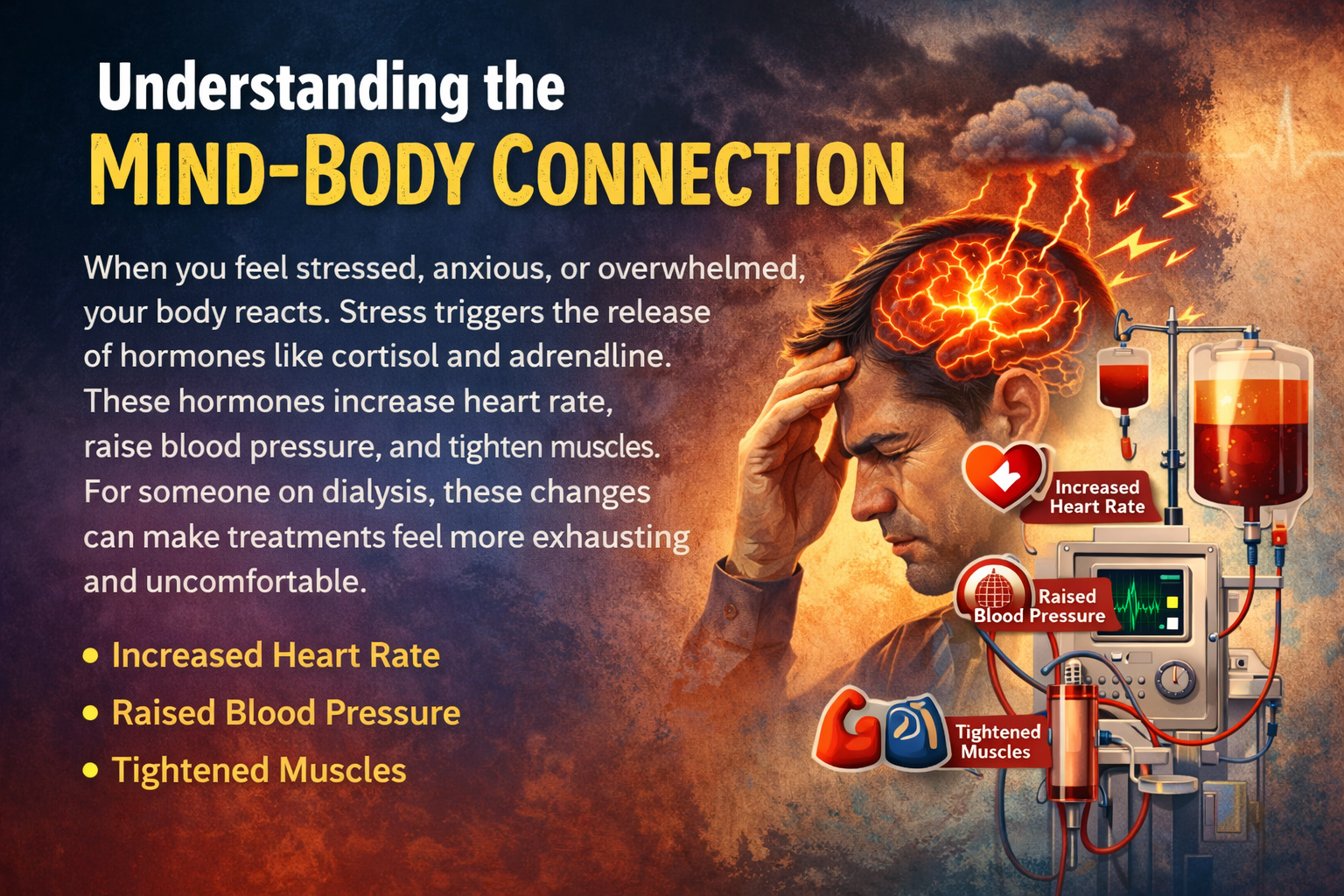
When you feel stressed, anxious, or overwhelmed, your body reacts. Stress triggers the release of hormones like cortisol and adrenaline. These hormones increase heart rate, raise blood pressure, and tighten muscles. For someone on dialysis, these changes can make treatments feel more exhausting and uncomfortable.

Dialysis already places physical demands on the body. Adding emotional stress can worsen fatigue, disturb sleep, reduce appetite, and even affect blood pressure control during sessions.

How Stress Can Affect Dialysis Patients

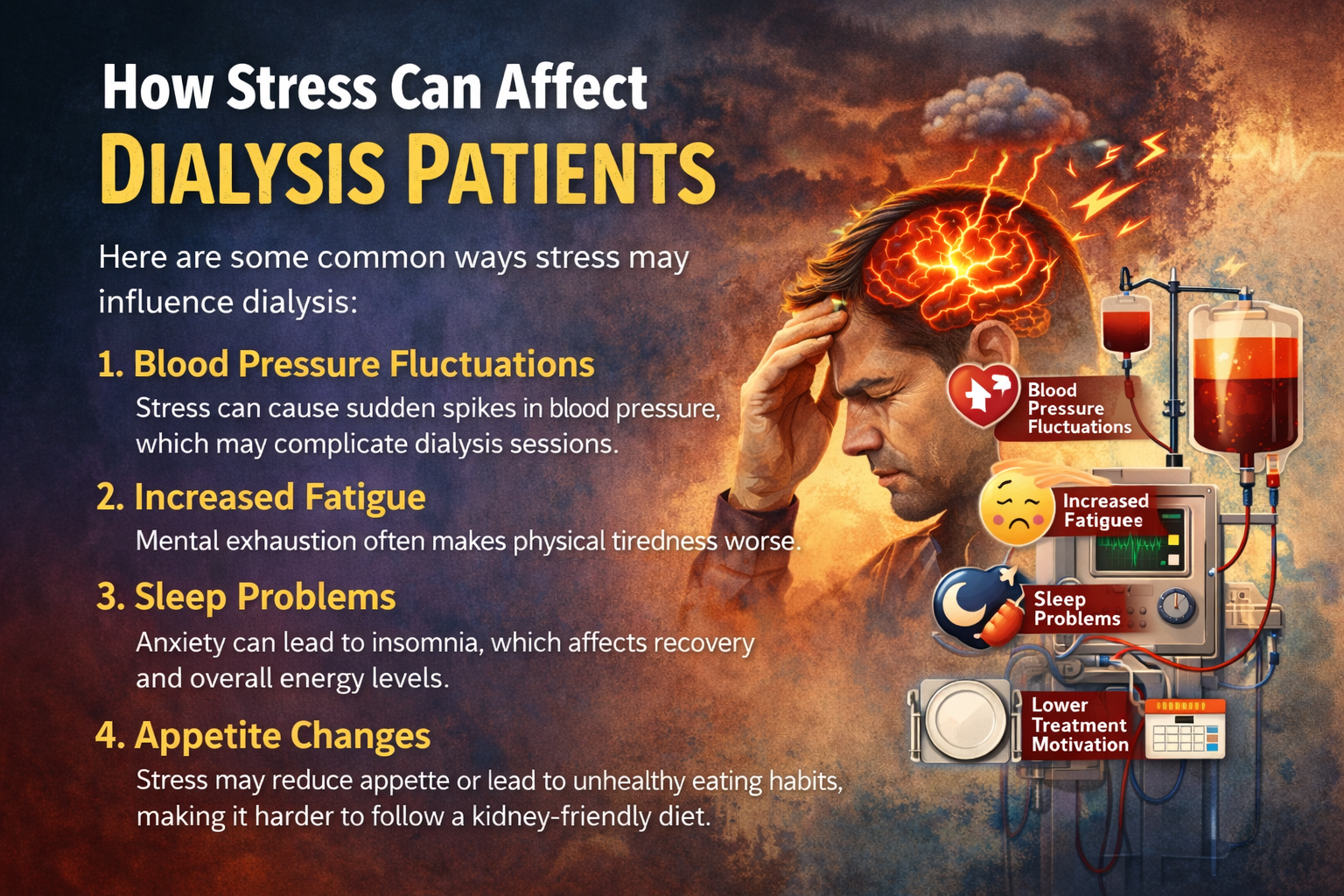
Here are some common ways stress may influence dialysis:

  1. Blood Pressure Fluctuations

Stress can cause sudden spikes in blood pressure, which may complicate dialysis sessions.

  1. Increased Fatigue

Mental exhaustion often makes physical tiredness worse.

  1. Sleep Problems

Anxiety can lead to insomnia, which affects recovery and overall energy levels.

  1. Appetite Changes

Stress may reduce appetite or lead to unhealthy eating habits, making it harder to follow a kidney-friendly diet.

  1. Lower Treatment Motivation

Feeling emotionally drained can make it difficult to stay consistent with medications, diet, or dialysis schedules.

Emotional Challenges of Dialysis

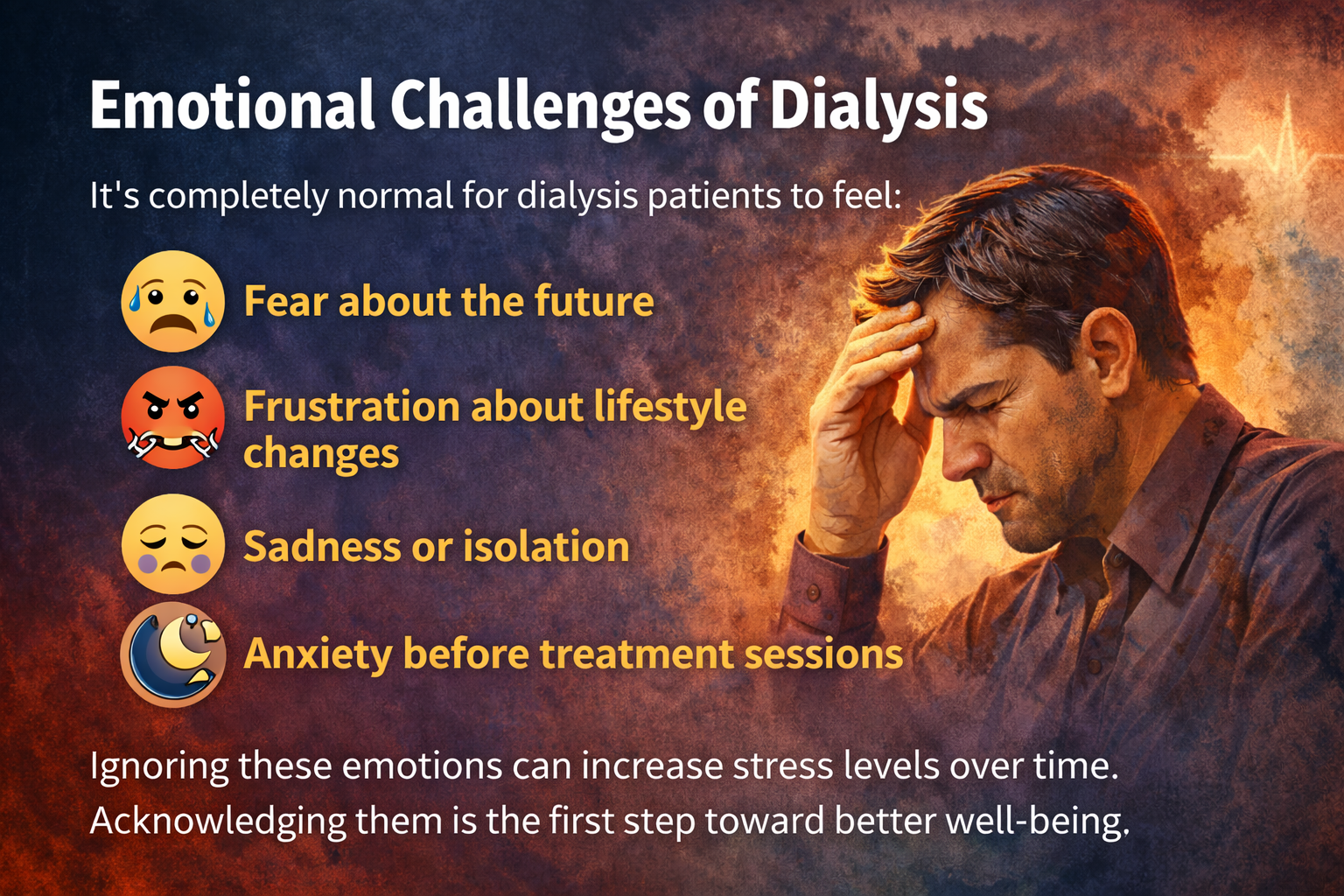
It’s completely normal for dialysis patients to feel:

  • Fear about the future
  • Frustration about lifestyle changes
  • Sadness or isolation
  • Anxiety before treatment sessions

Ignoring these emotions can increase stress levels over time. Acknowledging them is the first step toward better well-being.

Managing Stress During Dialysis

The good news is that stress can be managed. Small steps can make a big difference:

  • Practice deep breathing or meditation
  • Listen to calming music during sessions
  • Stay connected with family and friends
  • Join a dialysis support group
  • Talk openly with your healthcare team
  • Maintain light physical activity if allowed

Sometimes, speaking with a counselor or mental health professional can also be very helpful.

Conclusion

Dialysis treats your kidneys, but caring for your mental health supports your whole body. Managing stress doesn’t just improve your mood — it can help stabilize blood pressure, improve sleep, and enhance your overall quality of life. Remember, taking care of your mind is not optional; it’s part of your treatment.

Frequently Asked Questions (FAQs)

Can stress really affect my dialysis results?

Yes. Stress can influence blood pressure, sleep, appetite, and overall energy, which may impact your treatment experience.

Is feeling anxious before dialysis normal?

Absolutely. Many patients feel nervous. Talking about your fears can help reduce anxiety.

Can stress cause complications during dialysis

Severe stress may contribute to blood pressure changes or discomfort during sessions.

What is the best way to relax during dialysis?

Deep breathing, guided meditation, music, or watching something light can help you stay calm.

How to Change my Photo from Admin Dashboard?

Far far away, behind the word mountains, far from the countries Vokalia and Consonantia, there live the blind texts. Separated they live in Bookmarksgrove right at the coast

Should I talk to my doctor about stress?

Yes. Mental health is an important part of kidney care. Your healthcare team can guide you toward proper support. Your body listens to your mind. When you care for both, dialysis becomes more manageable and life feels more balanced.
Leave a Reply

Your email address will not be published. Required fields are marked *