Yes, you absolutely can live a healthy and normal life with just one kidney. Many people are born with one kidney, donate a kidney to a loved one, or lose a kidney due to illness or injury—and still go on to live full, active lives.
Your kidneys are powerful organs. Even one healthy kidney can do the work needed to filter waste, remove extra fluids, balance minerals, and regulate blood pressure. In fact, when a person has only one kidney, it often adapts and works harder to compensate for the missing one.
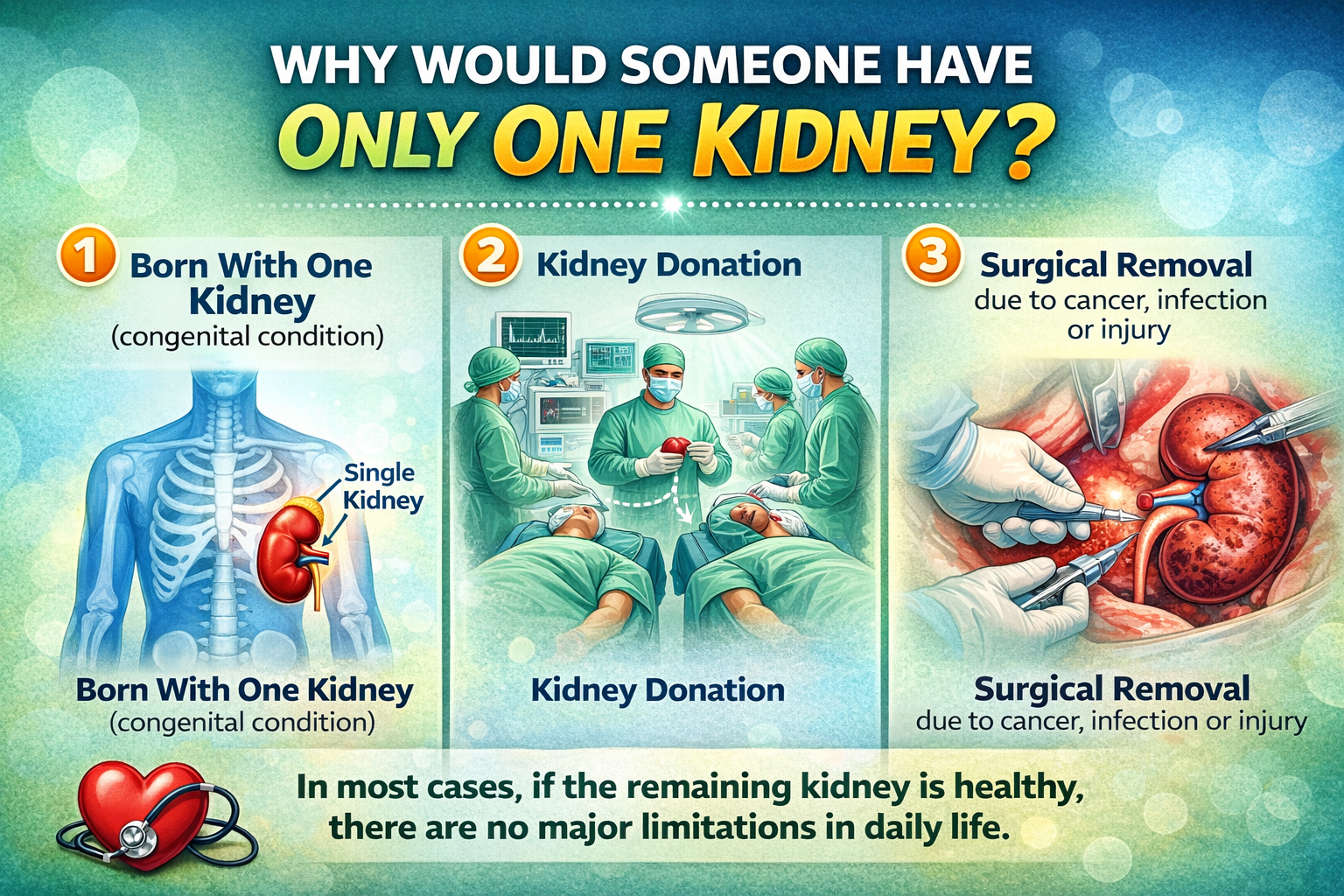
Why Would Someone Have Only One Kidney?
There are several reasons:
Born with one kidney (congenital condition)
Kidney donation
Surgical removal due to cancer, infection, or injury
In most cases, if the remaining kidney is healthy, there are no major limitations in daily life.
Can You Live Normally with One Kidney?
For most people, the answer is yes. You can:
Work a regular job
Exercise and stay active
Travel
Have children
Follow a normal routine
However, protecting your kidney becomes very important. Since you only have one, keeping it healthy is essential.
Tips to Stay Healthy with One Kidney
Here are some practical steps to protect your kidney health:
Keep Your Blood Pressure Under Control
High blood pressure can damage kidneys over time. Regular monitoring is important.
Manage Blood Sugar
If you have diabetes, controlling blood sugar levels is crucial.
Stay Hydrated
Drinking enough water helps your kidney filter waste properly.
Eat a Balanced Diet
Focus on fruits, vegetables, whole grains, and moderate protein intake. Avoid excessive salt.
Avoid Unnecessary Painkillers
Overuse of certain medications like NSAIDs can strain the kidney.
Regular Health Checkups
Routine blood and urine tests help ensure your kidney is functioning well..
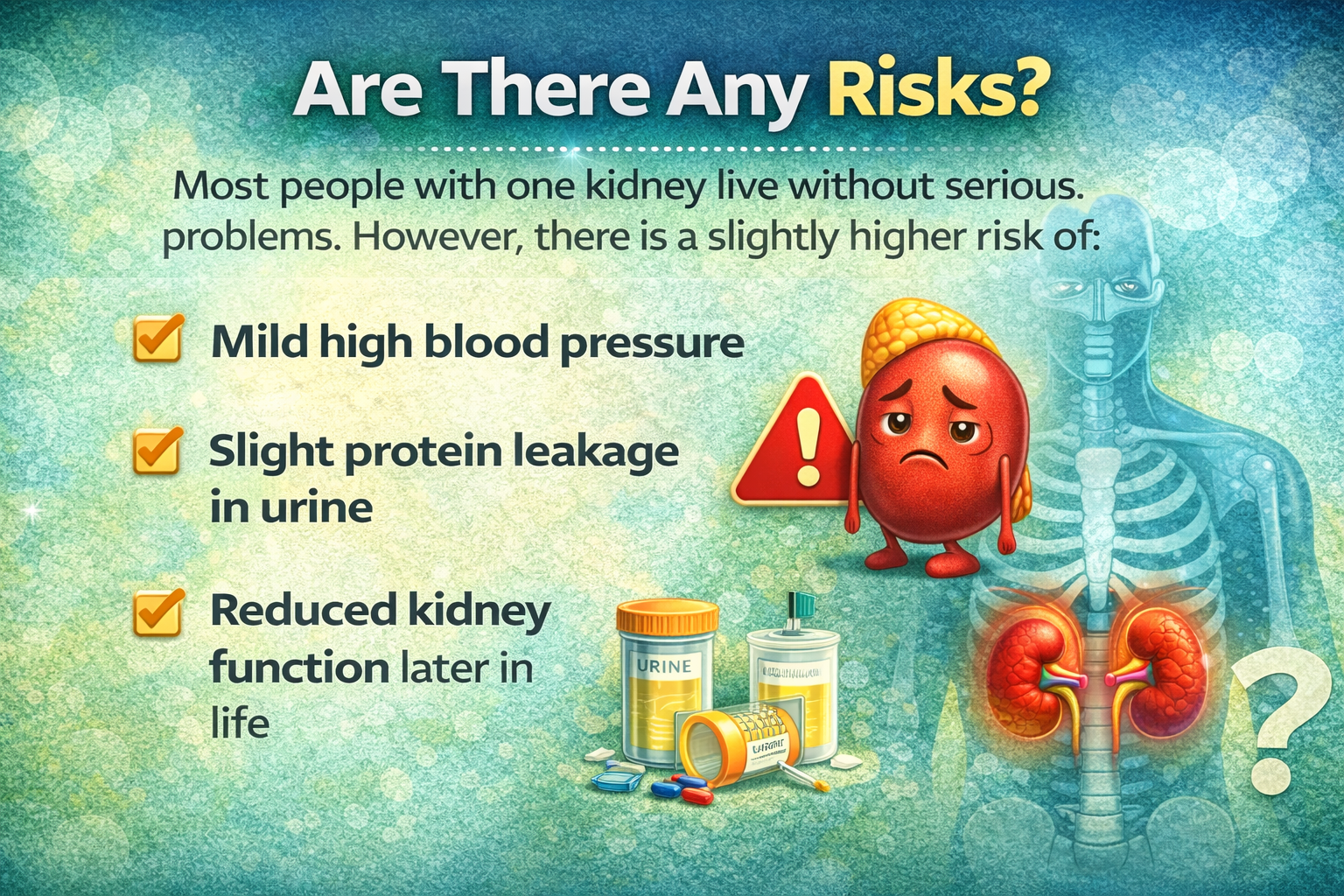
Are There Any Risks?
Most people with one kidney live without serious problems. However, there is a slightly higher risk of:
Mild high blood pressure
Slight protein leakage in urine
Reduced kidney function later in life
This is why long-term monitoring is recommended.
Final Thoughts
Living with one kidney is not a limitation—it’s a responsibility. With healthy habits and regular medical checkups, you can live a long, active, and fulfilling life. The key is awareness and prevention.
Frequently Asked Questions (FAQs)
Can I exercise if I have one kidney?
Yes. Regular exercise is encouraged. However, for contact sports, consult your doctor about protective measures.
Do I need a special diet?
Not always. Most people can eat normally but should avoid excessive salt and very high-protein diets.
Can I drink alcohol?
Moderate alcohol may be acceptable, but it’s best to consult your doctor based on your health condition.
Can women with one kidney have a healthy pregnancy?
Yes, many women with one healthy kidney have successful pregnancies. Regular monitoring is important.
How often should I get kidney tests done?
Usually once a year, but your doctor may suggest more frequent tests depending on your health.